Wilt Chamberlain
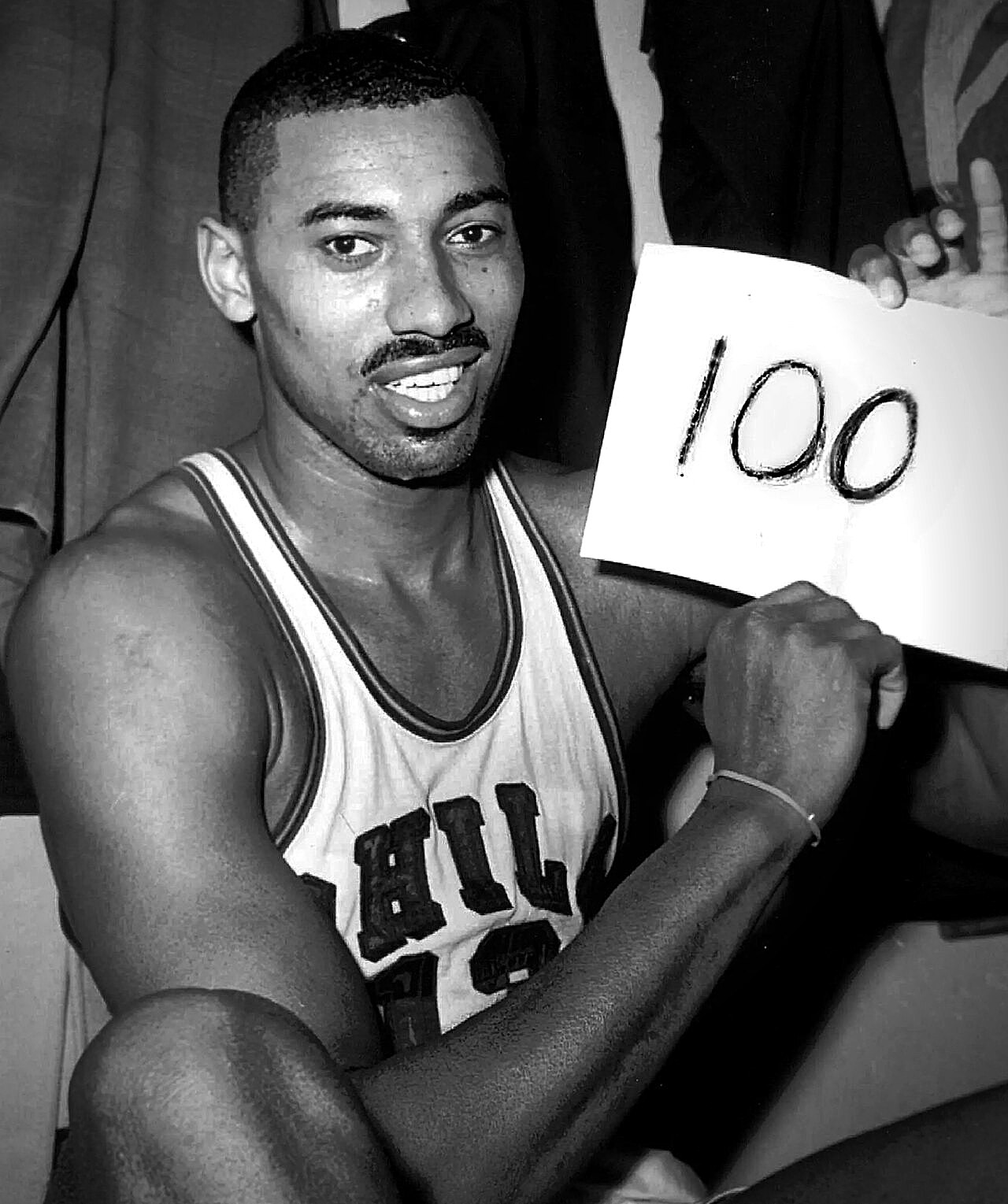
Wilt Chamberlain is the only player to score 100 points in an NBA game, the only one to average 50 points across a season, the only one to grab 55 rebounds in a game, and the career leader in rebounds with 23,924, more than 2,300 clear of Bill Russell in second place. He played fourteen seasons, won two championships, and retired in 1973.
The record book is the easy part of the story. The harder part is that most of the entries he holds were set against rules written specifically to stop him, and most of the entries he lost were taken by men who came looking for them on purpose.
Philadelphia, Overbrook, and a seven-footer who ran a 49-second quarter
He was born Wilton Norman Chamberlain on August 21, 1936, in Philadelphia, one of nine children of William Chamberlain, a custodian at a publishing house, and Olivia Chamberlain, who did domestic work. The family lived on Salford Street in West Philadelphia. He was six feet tall by ten and 6 feet 11 by the time he reached Overbrook High School in 1951.
Shop Wilt Chamberlain jersey
As an Amazon Associate we earn from qualifying purchases.
Cecil Mosenson coached him to two Philadelphia public-league championships, in 1953 and 1955. What his high school coaches pointed at afterward, though, was the track record. Chamberlain high-jumped 6 feet 6, put the shot 53 feet 4 inches, long-jumped 22 feet, ran the 440 in 49.0 seconds and the 880 in 1:58.3. Those are not big-man numbers. They are the numbers of a competitive decathlete who happened to be seven feet tall, in an era when nobody that size had ever been an athlete first.
The Overbrook basketball record includes a 90-point game against Roxborough in 1955. It appears in the Philadelphia public-school books and in almost no verifiable contemporaneous reporting, so treat it as school-record lore rather than a documented line.
Kansas, Phog Allen, and the triple-overtime final
He enrolled at the University of Kansas in the fall of 1955, recruited hard by Phog Allen, who had played for James Naismith and had been working on Chamberlain for two years. Freshmen were ineligible for varsity, so he did not play a varsity game until 1956-57.
That season Kansas went 24-3 and reached the national championship game against an undefeated North Carolina. It went three overtimes. Kansas lost 54-53. Chamberlain scored 23 with 14 rebounds against a box-and-one that Frank McGuire had built for the single purpose of keeping the ball away from him in the last five minutes, and the game is usually treated as the moment college coaching worked out how to defend a seven-footer: do not defend him, defend the four men who have to pass him the ball.
Kansas went 18-5 the next year and missed the tournament. He averaged 29.9 points across the two varsity seasons, left after his junior year, and signed with the Harlem Globetrotters for $50,000 in 1958. The NBA at the time would not admit a player before his college class graduated, and the Globetrotters were the best-paying alternative in the sport.
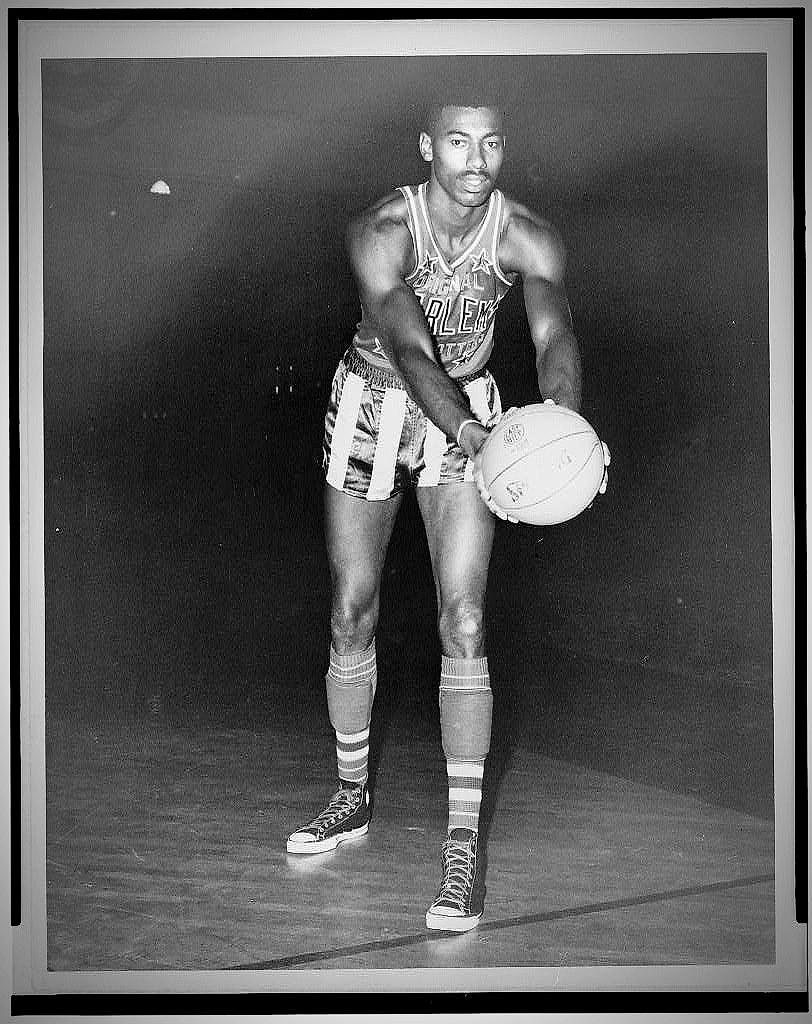
He toured through the 1958-59 season. Meadowlark Lemon later described it as the year Chamberlain learned to play for a crowd rather than against an opponent. He returned to the NBA in 1959, signing with the Philadelphia Warriors, who had held his rights since 1955 through the league’s territorial-pick rule, for roughly $65,000. That was more than any player in the league was making.
The rookie year that broke the scale
His first NBA season is still the most statistically disruptive debut in North American team sport. He averaged 37.6 points and 27.0 rebounds a game in 1959-60 and was named both Most Valuable Player and Rookie of the Year, the only player to take both in the same year. The Warriors went 49-26 and lost the Eastern Division Finals to Boston.
The league at that point had been writing rules to equalize height for a decade. The lane had been widened from six feet to twelve in 1951 to contain George Mikan. Chamberlain’s rookie season made clear that a rules-based answer was not going to be enough on its own. In October 1960 the owners considered widening the lane to sixteen feet and tabled it. The change passed in 1964.
What actually happened at Hershey on March 2, 1962?
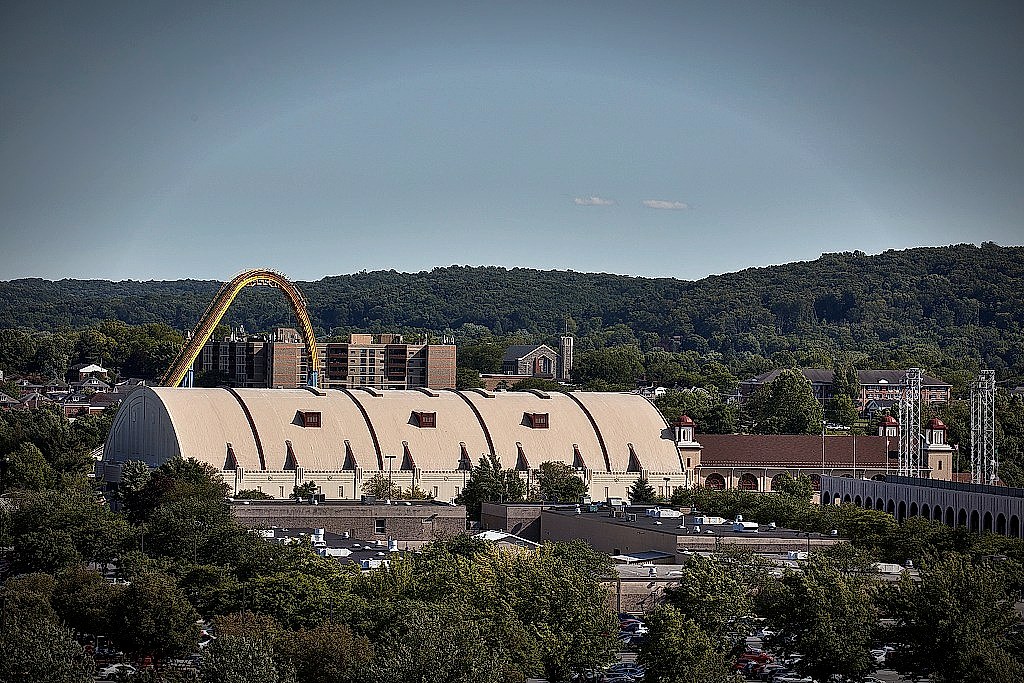
On March 2, 1962, at Hersheypark Arena, the Philadelphia Warriors beat the New York Knicks 169-147 in front of 4,124 people. Chamberlain scored 100 points on 36-of-63 from the floor and 28-of-32 from the free-throw line, the last of them with 46 seconds remaining.
The game was not televised and no film of it exists. Bill Campbell called the fourth quarter on Philadelphia radio and the audio of the hundredth point survives. The NBA treated Hershey as a contractual obligation to a neutral site and did not staff it; the most complete account is Gary Pomerantz’s Wilt, 1962: The Night of 100 Points and the Dawn of a New Era (Crown, 2005), assembled from interviews with the survivors four decades later.
Chamberlain’s version, given consistently over the rest of his life, was that he stopped tracking the number after the third quarter, that the Warriors’ bench began feeding him deliberately once 100 came into range, and that the Knicks spent the last four minutes double-teaming him and fouling other Warriors to keep the ball out of his hands. Both benches were manipulating the game by the end. He got there anyway.
The rest of that season is nearly as strange. He averaged 50.4 points and 25.7 rebounds across 80 games, scored 4,029 points, and played 3,882 of a possible 3,890 minutes. He would have played every one of them if he had not been ejected from a game with eight minutes left, which is the only time in his career he left a floor early. He never fouled out of an NBA game, in 1,045 regular-season appearances or 160 playoff ones.
San Francisco, and the trade back to Philadelphia
The Warriors moved to San Francisco in the summer of 1962. Chamberlain spent two and a half seasons there and never settled; he kept an apartment in Philadelphia and commuted. He averaged 44.8 points in 1962-63 and 36.9 in 1963-64, and San Francisco reached the 1964 Finals and lost to Boston in five.
In January 1965 the Warriors sent him back to Philadelphia, to the 76ers, who had been the Syracuse Nationals until 1963, for Connie Dierking, Paul Neumann, Lee Shaffer and cash.
The 1967 championship, and the role change that produced it
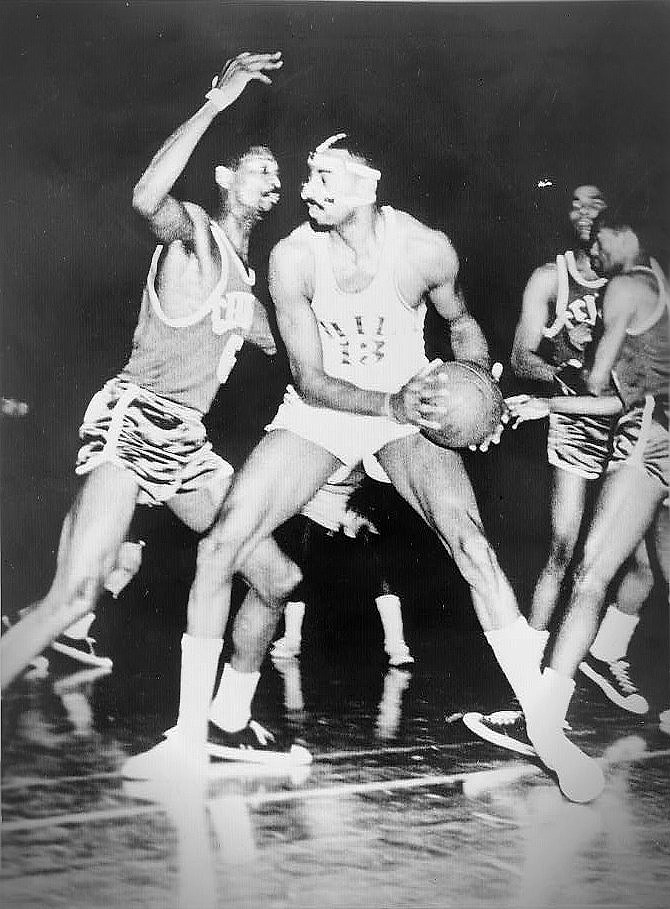
Alex Hannum took over as 76ers coach in 1966 and asked Chamberlain to stop shooting. He agreed. His scoring average dropped from 33.5 to 24.1. His assists went from 5.2 to 7.8. His field-goal percentage went to 68.3, which was and is an absurd number, because he stopped taking anything that was not close to the rim.
The 1966-67 76ers went 68-13, then the best regular-season record in league history. They beat San Francisco in six in the Finals. Chamberlain was MVP for the third year running and led the league in rebounding at 24.2 a game. The title also ended a nine-season stretch in which Bill Russell’s Celtics had won every year Chamberlain had been in the NBA.
He went further the following season. In 1967-68 he averaged 8.6 assists and finished with 702, which led the entire NBA. Through 2026 he is still the only center to top the league in total assists.
Los Angeles, 1968, and the 1972 championship
Philadelphia traded him to the Los Angeles Lakers on July 9, 1968, for Archie Clark, Darrall Imhoff, Jerry Chambers and cash. Los Angeles then had Chamberlain, Jerry West and Elgin Baylor on one roster and lost the Finals in 1969 and 1970 anyway, the first of those in seven games to Russell’s last Celtics team.
The 1971-72 Lakers finished 69-13, including a 33-game winning streak between November 5, 1971 and January 7, 1972 that is still the longest in the history of American major-league team sport. They beat the Knicks in five in the Finals. Chamberlain was Finals MVP at thirty-five, playing through a fractured right wrist he had picked up in the conference finals against Milwaukee. He scored 24 points and took 29 rebounds in the closing game.
He has described that ring, in every interview afterward, as the one that mattered.
Which of his records still stand?
He retired after 1972-73 at thirty-six. The final line: 1,045 games, 31,419 points, 23,924 rebounds, 30.1 points and 22.9 rebounds a game, 45.8 minutes a game. Four MVP awards, in 1960, 1966, 1967 and 1968. Seven scoring titles, eleven rebounding titles, one assists title.
Still his, more than fifty years later:
| Record | Mark | Set |
|---|---|---|
| Most points, game | 100 | March 2, 1962 vs New York |
| Most rebounds, game | 55 | November 24, 1960 vs Boston |
| Most points, season | 4,029 | 1961-62 |
| Highest scoring average, season | 50.4 | 1961-62 |
| Most rebounds, season | 2,149 | 1960-61 |
| Highest rebounding average, season | 27.2 | 1960-61 |
| Most minutes, season | 3,882 | 1961-62 |
| Career rebounds | 23,924 | 1959 to 1973 |
The one that broke recently was consecutive games scoring 20 or more points, which Shai Gilgeous-Alexander passed during the 2025-26 season. That is the pattern with Chamberlain’s records: they do not erode, they get hunted.
Track, volleyball, and the years after basketball
He coached the San Diego Conquistadors of the ABA as a player-coach in 1973-74, though a Lakers lawsuit stopped him from ever suiting up. San Diego went 37-47. He never took another basketball job.
Volleyball is the part usually treated as a curiosity and should not be. He co-founded the International Volleyball Association in 1975, played a professional season with the Orange County Stars, served a term as league president, and is in the IVA Hall of Fame. He also kept competing in open track and road running into his forties, and he sponsored the Wilt’s Wonder Women track club, which produced multiple national-level American sprinters.
He appeared in the 1984 film Conan the Destroyer as Bombaata, opposite Arnold Schwarzenegger. In 1991 he published A View from Above (Villard), a memoir now known almost entirely for one sentence claiming 20,000 sexual partners. He said afterward that the figure was a rhetorical estimate and that he regretted putting it in the book, because it swallowed everything else between the covers. It did.
Death, and the numbers retired
He died of congestive heart failure at his home in Bel Air, California, on October 12, 1999, at sixty-three. The Lakers had retired his number 13 in 1983; the 76ers retired it in 1991; the Golden State Warriors, the franchise he began with, retired it as well.

Which NBA rules were written because of him?
Eight rule changes between 1956 and 1968 were drafted with Chamberlain in mind, in whole or in part. The lane went from twelve feet to sixteen. Offensive goaltending became a violation. Inbounding over the backboard was outlawed. The free-throw lane entry rules were rewritten, and the long-repeated reason is that he had taken foul shots with a running start and dunked them, a story the NCAA acted on first and the NBA followed. The offensive-goaltending rule is the one people repeat, and it is repeated because the league did not want to find out whether the reports that he had offered to drop the ball in from above the rim were true.
By the championship measure he lost his era; Russell won eleven. That argument closed against him inside his own career and it has not reopened. But the modern center’s job description, setting a screen and rolling, running the offense from the high post, taking the rebound and starting the break with the outlet pass, descends more directly from Chamberlain’s last six seasons than from any other player of his generation. He gave up the scoring to do it and won a title the first year he did.
The trophy count is two. The record book has not meaningfully changed since 1973.
As an Amazon Associate we earn from qualifying purchases.
Related reading
- Wilt Chamberlain’s records: which are still standing
- Every 70-point NBA game
- Bill Russell, the rival who won eleven
- NBA all-time scoring leaders
- Philadelphia 76ers and Los Angeles Lakers franchise histories
Sources
- Basketball-Reference, Wilt Chamberlain career page: season-by-season per-game and total splits, career totals, playoff splits (retrieved August 2, 2026)
- Basketball-Reference, career rebounds leaderboard (Chamberlain 23,924; Russell 21,620), retrieved August 2, 2026
- Basketball-Reference box score, Philadelphia Warriors vs New York Knicks, March 2, 1962, Hersheypark Arena
- Gary M. Pomerantz, Wilt, 1962: The Night of 100 Points and the Dawn of a New Era (Crown Publishers, 2005)
- Wilt Chamberlain, Wilt: Just Like Any Other 7-Foot Black Millionaire Who Lives Next Door (Macmillan, 1973), written with David Shaw
- Wilt Chamberlain, A View from Above (Villard Books, 1991)
- Bill Campbell, Philadelphia Warriors radio broadcast, March 2, 1962, fourth-quarter audio
- Naismith Memorial Basketball Hall of Fame, 1979 induction file
- Philadelphia 76ers team records, 1966-67; Los Angeles Lakers team records, 1971-72
Shop Jerseys & Fan Gear at Fanatics
As a Fanatics affiliate, we may earn a commission from qualifying purchases.
Shop on Amazon
As an Amazon Associate, we earn from qualifying purchases.
Shop Sneakers & Gear at JD Sports
We may earn a commission from qualifying purchases on JD Sports.
Sources
- Basketball-Reference, Wilt Chamberlain
- Basketball-Reference, career rebounds leaders
- Naismith Hall of Fame, Wilt Chamberlain
- Philadelphia Warriors vs New York Knicks box score, March 2 1962 (Hershey, PA)
- Wilt Chamberlain, "A View from Above" (Villard, 1991)
- Gary M. Pomerantz, "Wilt, 1962: The Night of 100 Points and the Dawn of a New Era" (Crown, 2005)